
Reliable Courier & Logistics Solutions
At Express Courier Services, we understand that your deliveries are more than just packages — they represent commitments, deadlines, and trust. That’s why we’ve built a courier system designed for speed, security, and accuracy. From urgent medical supplies to sensitive legal files, we deliver with the highest level of care. Our statewide coverage ensures that no matter where you are in California, dependable service is always within reach. We offer flexible solutions for businesses of every size, from one-time deliveries to long-term dedicated driver programs. Our experienced team and advanced logistics ensure smooth handling and real-time tracking at every stage. We take pride in being the courier service businesses rely on to keep operations running smoothly. With Express Courier Services, you gain a partner who delivers peace of mind with every shipment.
Start Transforming Your
Logistics Landscape
Reliable Courier & Logistics Solutions Across Industries
Your Premier Choice for Critical
Medical Supply Deliveries
Industry Highlights
Healthcare & Pharma
Secure, compliant delivery for clinics, labs, and pharmacies.
Healthcare & Pharma
Cold-chain options, chain-of-custody, and real-time tracking for temperature-sensitive shipments.
Click to Learn More
Legal Services
Time-sensitive filings and confidential document delivery.
Legal Services
Secure handling, proof of delivery, and rush courthouse runs you can trust.
Click to Learn More
Retail & E-commerce
Fast last-mile and same-day delivery for online and in-store.
Retail & E-commerce
Flexible windows, returns management, and live ETAs to delight customers.
Click to Learn More
Manufacturing & Industrial
Critical parts and MRO deliveries to keep lines running.
Manufacturing & Industrial
Expedited hot-shot runs, vendor pickups, and scheduled route coverage.
Click to Learn More
Government & Education
Dependable inter-office and campus courier services.
Government & Education
Audit-ready logs, secure handling of records, and scheduled routes across sites.
Click to Learn More
Food & Beverage Logistics
Fresh, safe, and timely deliveries for perishables.
Food & Beverage Logistics
Temperature-controlled options, HACCP-aware handling, and route optimization.
Click to Learn More
Why
Choose
Express Courier Services?

Speed
Same-day & STAT deliveries

Security
HIPAA, chain-of-custody, tamper-proof handling

Technology
Real-time GPS tracking & proof of delivery

Coverage
Serving all of California with local expertise
Tailored Solutions for Every Specialty Medication
From small parcels to sensitive medical supplies, our tailored courier solutions meet the needs of every industry we serve.

On-Demand & Same-Day Delivery
Scheduled Routes & Recurring Logistics

Temperature-Controlled Transport

Secure & Regulatory-Compliant Handling
Specialized
Logistics
for
Every Industry
We understand that each sector has unique requirements. That’s why our solutions are tailored — whether you’re a pharmacy, law firm, manufacturer, or retailer.
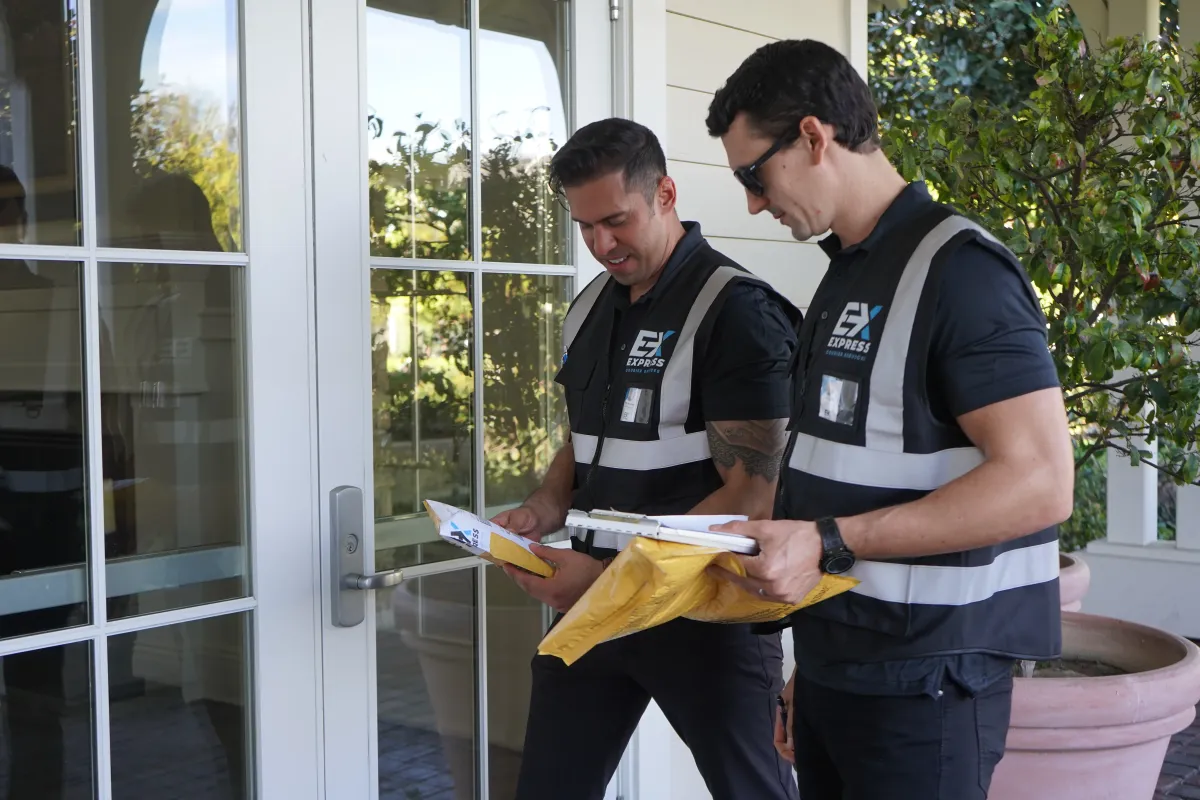
Track
Every
Delivery
in
Real
Time
GPS & route optimization
Proof-of-delivery signatures/photos
Secure client portal
Trusted Across California
Michelle Rodriguez
Pharmacy Manager
"Express Courier Services has seriously transformed the game for us at Central Health Pharmacy. As a Pharmacy Manager, the constant juggling of medical supplies can be a headache. But with these guys, it's like they've taken the stress out of my job.
Now, I don't lose sleep over running out of essentials. Their deliveries are a lifesaver!"

Alex Nguyen
Pharmacist
"These guys at Express Courier Services are next level! Being a pharmacist is no joke, and precision is everything. Unlike other couriers that left us biting our nails, these guys handle our sensitive materials like pros. It's a breath of fresh air - finally, a courier service that gets it right every time! Highly recommended!"
Dr. Jonathan L. Kim
Medical Director
"Express Courier Services is the secret weapon in our urgent care playbook.
As a Medical Director, I can't afford delays. These folks have cracked the code to prompt deliveries. Now, we can focus on what really matters taking care of our patients without the hassle of late shipments. Working with them is always a pleasure."
Need to verify our reliability?
Our Sales team will provide you with letters of recommendations from our current clients.
Logistics Insights & Industry Trends

5 Delivery Mistakes Law Firms Make (And How to Fix Them with the Right Courier)
Law firms do not “run deliveries.” They run deadlines. That is why delivery mistakes in a legal environment are rarely just inconvenient. They can trigger missed filing cutoffs, delayed closings, client frustration, and disputes that consume hours of staff time.
Most delivery problems in law firms come from the same root cause: the delivery process is informal. A document is handed to someone with a vague instruction like “drop it off,” and everyone assumes it will work out. The fix is not simply “use a courier.” The fix is using the right courier model, with clear handoff rules, proof of delivery, and an exception process that protects deadlines and confidentiality.
If you want a courier partner built for legal filings, secure client deliveries, and evidence-style custody discipline, start here.
If you want real-time tracking and time-stamped proof of delivery that reduces disputes, start here.
Mistake 1: Treating courthouse runs like normal deliveries
Courthouse filings are not “deliveries.” They are deadline events. The difference is huge. A normal delivery can be reattempted later. A courthouse filing that misses a cutoff can create immediate consequences.
What this looks like in real life:
The runner is sent with the wrong address, the wrong division, missing copies, or unclear instructions about what must be returned. The clerk rejects the filing and the office finds out too late.
How to fix it:
Use a courthouse-run checklist. Always specify the court location, division, filing window, and the success definition, like “file-stamp and return conformed copy.” If eFiling is required for the case type, confirm whether a physical run is even needed.
As an example of court-side clarity, San Bernardino County provides guidance on where filings can be submitted and which locations handle which matters.
Courier model to use:
On-demand or time-critical courier for same-day deadlines, plus a route program for repeatable courthouse drops.
Mistake 2: Not requiring real proof of delivery
Many law firms still accept “delivered” as a status, even for sensitive documents. That is a dispute waiting to happen. If the recipient later says “we never got it,” your team loses time reconstructing what happened and your client loses confidence.
What this looks like in real life:
A packet is left at reception, a mailroom, or with a random staff member. There is no named recipient, no signature, no timestamp record the firm can retrieve quickly.
How to fix it:
Require proof of delivery that matches the risk. At minimum, you want time-stamped delivery confirmation and recipient details. For high-stakes items, require named recipient signature.
Modern courier platforms can provide proof of delivery that includes timestamps, recipient signatures, and other confirmation records, which reduces disputes and rework.
For context, courier industry expectations increasingly center on real-time tracking and proof of delivery as baseline requirements, not premium features.
Courier model to use:
Any model is fine, as long as the courier has a strong tracking and POD system. If a vendor cannot produce POD fast, that is the wrong vendor.
Mistake 3: Vague delivery instructions that force the driver to improvise
Couriers do not fail because they cannot drive. They fail because receiving rules are unclear. Many buildings have security desks, restricted floors, and “no drop-off” policies. If your instructions do not specify what is allowed, the driver will either improvise or spend time trying to decide, which creates delay risk.
What this looks like in real life:
The courier arrives and discovers the office requires a named recipient, but no name was provided. The receiving desk refuses the package. The courier waits. The firm is unaware until the deadline is at risk.
How to fix it:
Standardize your delivery notes. Every request should include:
exact address and suite
named recipient or authorized department
whether reception is allowed
whether a mailroom is allowed
signature required yes or no
what to do if recipient is unavailable
This is also where an exception escalation process matters. You want a courier who escalates to dispatch and to your team before changing the delivery plan.
Courier model to use:
On-demand for time-sensitive deliveries with strict receiving rules, and scheduled routes for predictable recurring stops.
Mistake 4: Sending checks and cash-equivalent items through casual channels
Law firms move settlement checks, retainer checks, and other cash-equivalent documents. These should not be treated like basic mail or left with front desks. The risk is not only delay. It is theft exposure and dispute exposure.
What this looks like in real life:
A check is mailed or dropped casually, sits unattended, and later becomes “missing.” The firm now has to trace delivery, stop payment, reissue, and explain.
Mail theft is a real risk environment, and USPS Inspection Service prevention guidance includes steps like promptly collecting mail and being proactive about overdue checks.
How to fix it:
Use direct-to-recipient delivery with signature required. Use sealed packaging, clear custody notes, and zero unattended drop-offs. For high-value items, require named recipient delivery.
Courier model to use:
On-demand or dedicated courier, with strict proof of delivery requirements and documented handoffs. If you work frequently with financial items, this type of workflow aligns with financial-services custody expectations.
Mistake 5: Using office staff as “runners” and calling it a process
Many firms rely on office staff to “just drop it off,” especially when the destination is close. That looks cheaper until you count lost productivity, reimbursement costs, and liability exposure. It also creates the worst accountability gap because staff deliveries usually have no structured proof of delivery and no exception process.
California Labor Code 2802 requires employers to reimburse employees for necessary expenditures incurred in direct consequence of their duties, which often includes work-related vehicle expenses.
How to fix it:
Formalize courier work as a service, not a favor. Put predictable runs on a route. Use on-demand for urgent exceptions. Keep staff deliveries only for truly low-risk internal moves where receipt can be confirmed easily.
If you want a deeper operations-oriented view on when organizations switch from internal driving to courier partners due to cost, risk, and scaling, this is a relevant reference.
Courier model to use:
Hybrid: scheduled routes for repeatable movement, on-demand for deadline runs.
The “right courier” checklist for law firms
If you want a fast checklist for choosing and configuring the right courier partner, the essentials are:
Clear service tiers: scheduled routes vs on-demand
Real-time tracking and proof of delivery
Named recipient and signature options
Exception escalation and documentation
Chain-of-custody discipline for sensitive materials
A process for courthouse filings, including returns of conformed copies
Closing
Most law firm delivery problems are preventable. The fix is not “work harder.” It is building a delivery workflow that matches legal realities: deadlines, confidentiality, and proof.
If you want to map your firm’s deliveries into scheduled routes and on-demand tiers, and ensure tracking and proof of delivery are consistent, start here.

Alpha Gabriel Marquina
Start Transforming Your
Logistics Landscape
Need a Delivery Partner You Can Rely On?
Get a custom courier solution for your business today.
Ready to Experience Reliable Courier Services?