Reliable Courier & Logistics Solutions
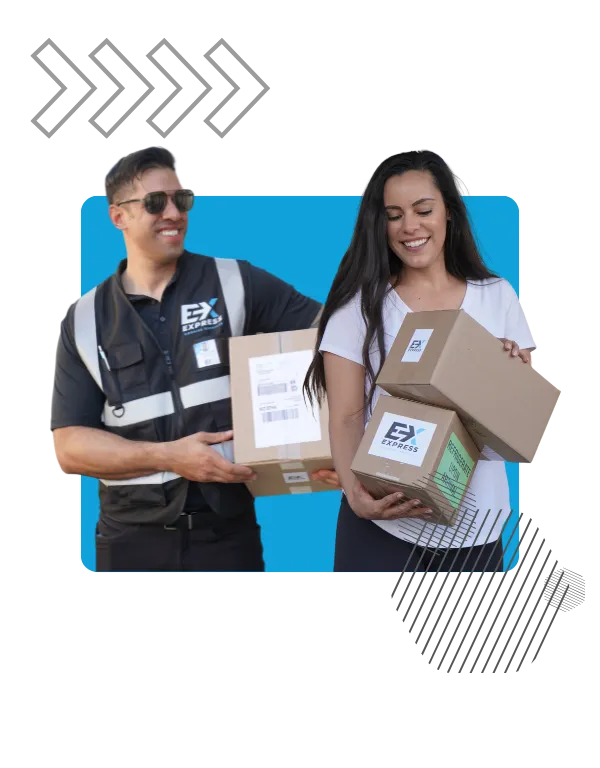
At Express Courier Services, we understand that your deliveries are more than just packages — they represent commitments, deadlines, and trust. That’s why we’ve built a courier system designed for speed, security, and accuracy. From urgent medical supplies to sensitive legal files, we deliver with the highest level of care. Our statewide coverage ensures that no matter where you are in California, dependable service is always within reach. We offer flexible solutions for businesses of every size, from one-time deliveries to long-term dedicated driver programs. Our experienced team and advanced logistics ensure smooth handling and real-time tracking at every stage. We take pride in being the courier service businesses rely on to keep operations running smoothly. With Express Courier Services, you gain a partner who delivers peace of mind with every shipment.
Start Transforming Your
Logistics Landscape
Reliable Courier & Logistics Solutions Across Industries
Your Premier Choice for Critical
Medical Supply Deliveries
Industry Highlights
Healthcare & Pharma
Secure, compliant delivery for clinics, labs, and pharmacies.
Healthcare & Pharma
Cold-chain options, chain-of-custody, and real-time tracking for temperature-sensitive shipments.
Click to Learn More
Legal Services
Time-sensitive filings and confidential document delivery.
Legal Services
Secure handling, proof of delivery, and rush courthouse runs you can trust.
Click to Learn More
Retail & E-commerce
Fast last-mile and same-day delivery for online and in-store.
Retail & E-commerce
Flexible windows, returns management, and live ETAs to delight customers.
Click to Learn More
Manufacturing & Industrial
Critical parts and MRO deliveries to keep lines running.
Manufacturing & Industrial
Expedited hot-shot runs, vendor pickups, and scheduled route coverage.
Click to Learn More
Government & Education
Dependable inter-office and campus courier services.
Government & Education
Audit-ready logs, secure handling of records, and scheduled routes across sites.
Click to Learn More
Food & Beverage Logistics
Fresh, safe, and timely deliveries for perishables.
Food & Beverage Logistics
Temperature-controlled options, HACCP-aware handling, and route optimization.
Click to Learn More
Why
Choose
Express Courier Services?

Speed
Same-day & STAT deliveries

Security
HIPAA, chain-of-custody, tamper-proof handling

Technology
Real-time GPS tracking & proof of delivery

Coverage
Serving all of California with local expertise
Tailored Solutions for Every Specialty Medication
From small parcels to sensitive medical supplies, our tailored courier solutions meet the needs of every industry we serve.

On-Demand & Same-Day Delivery
Scheduled Routes & Recurring Logistics

Temperature-Controlled Transport

Secure & Regulatory-Compliant Handling
Specialized
Logistics
for
Every Industry
We understand that each sector has unique requirements. That’s why our solutions are tailored — whether you’re a pharmacy, law firm, manufacturer, or retailer.
Track
Every
Delivery
in
Real
Time
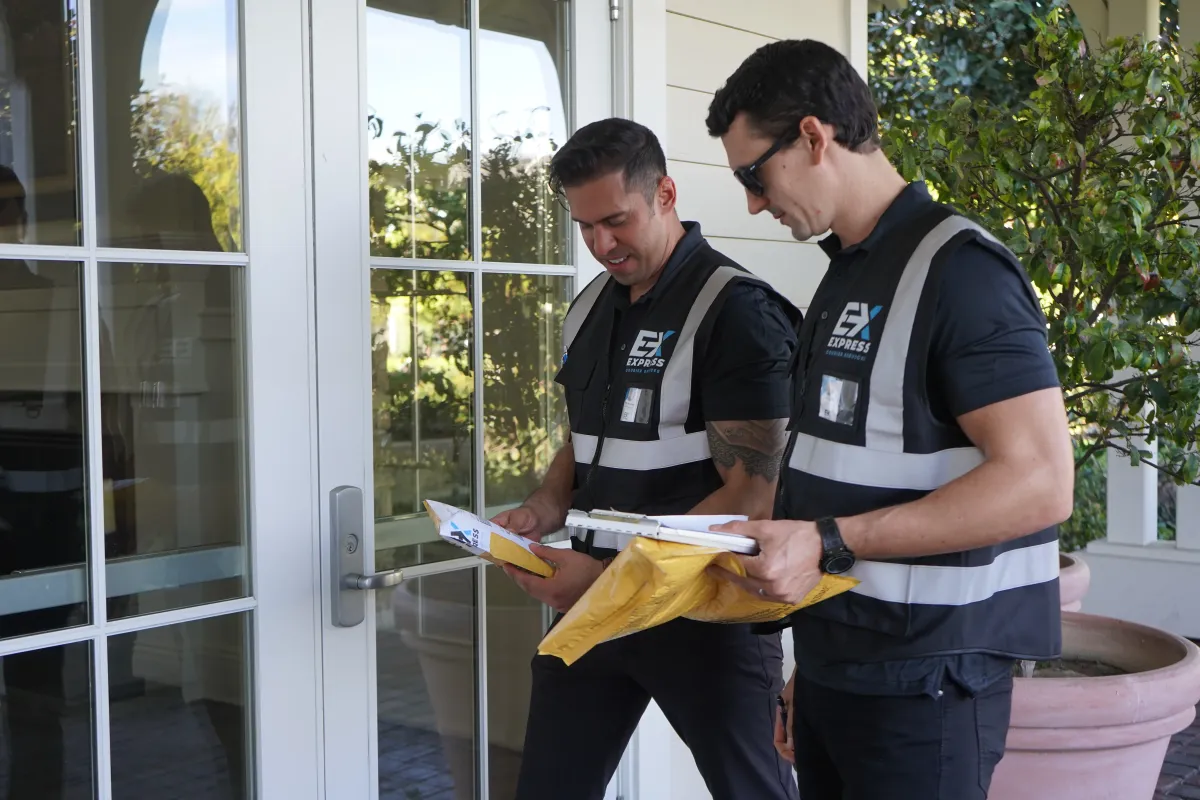
GPS & route optimization
Proof-of-delivery signatures/photos
Secure client portal
Trusted Across California
Michelle Rodriguez
Pharmacy Manager
"Express Courier Services has seriously transformed the game for us at Central Health Pharmacy. As a Pharmacy Manager, the constant juggling of medical supplies can be a headache. But with these guys, it's like they've taken the stress out of my job.
Now, I don't lose sleep over running out of essentials. Their deliveries are a lifesaver!"

Alex Nguyen
Pharmacist
"These guys at Express Courier Services are next level! Being a pharmacist is no joke, and precision is everything. Unlike other couriers that left us biting our nails, these guys handle our sensitive materials like pros. It's a breath of fresh air - finally, a courier service that gets it right every time! Highly recommended!"
Dr. Jonathan L. Kim
Medical Director
"Express Courier Services is the secret weapon in our urgent care playbook.
As a Medical Director, I can't afford delays. These folks have cracked the code to prompt deliveries. Now, we can focus on what really matters taking care of our patients without the hassle of late shipments. Working with them is always a pleasure."
Need to verify our reliability?
Our Sales team will provide you with letters of recommendations from our current clients.
Logistics Insights & Industry Trends
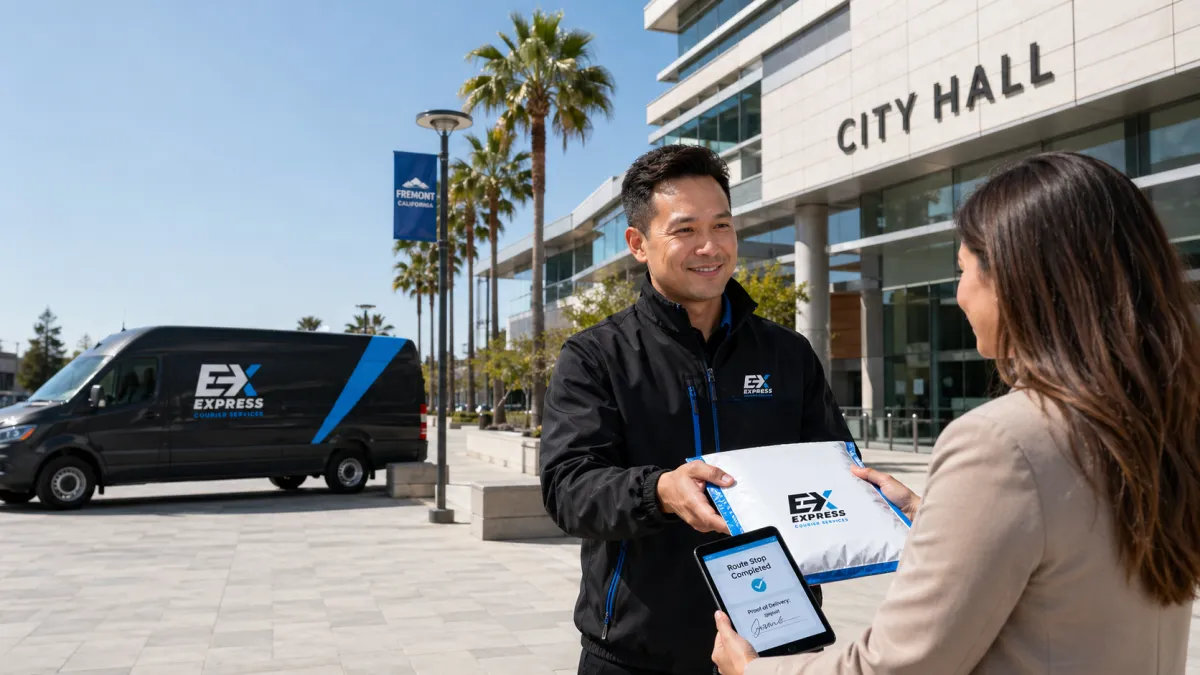
From City Hall to Satellite Offices: Building a Reliable Courier Route Network in Fremont
Fremont is the kind of city where operations can feel “close enough” to handle deliveries informally. A packet needs to move from City Hall to a satellite office. A records request needs to reach a department before review. Supplies need to be transferred between facilities. Someone says, “We’ll just send someone.”
That works until it doesn’t.
As cities grow, informal runs create predictable problems: missed pickup windows, lost staff time, inconsistent handoffs, and the classic “where is it?” scramble. A route-based courier network fixes this by turning internal deliveries into a schedule. It creates predictable pickup windows, documented proof of delivery, and an exception process that keeps city operations moving without pulling staff away from public-facing work.
If you want an example of how route-based courier programs modernize inter-office movement for local government, this article is a helpful reference.
If you want a clear overview of courier service models including scheduled routes and on-demand coverage for exceptions, start here.
If you want tracking, proof of delivery, and exception alerts for city deliveries, start here.
Why cities like Fremont shift from “runs” to route networks
Most city deliveries are not random. They are repeatable patterns hiding inside daily routines.
City Hall to a department building
Finance to a satellite facility
HR or city attorney packets to a secure receiving point
Records transfers and permit packets between counters and back offices
Library branch materials to a central facility
Supplies moving between storage and service locations
If you map two weeks of deliveries, you usually find 70 to 90 percent of them repeat in some way. That repeatability is the foundation of a courier route network.
Routes reduce operational noise by answering three questions in advance:
When does pickup happen
Where does it go
How is completion documented
What a “courier route network” means in a municipal context
A route network is not one route. It is a schedule that matches how your city moves.
It includes:
A baseline route layer for predictable movement
A secondary route or “loop” for additional facilities
An on-demand lane for true exceptions and urgent runs
Standards for proof of delivery and exception handling
This is the simplest model cities use to balance cost and responsiveness, because not every city delivery needs a rush driver, but some deliveries must be handled immediately.
If you want a service overview that supports route-based logistics plus on-demand exceptions, start here.
Step 1: Identify your Fremont delivery nodes and classify them by risk
A reliable network begins with knowing your endpoints. In a city environment, not all stops are equal.
Classify every stop into one of three tiers:
Tier 1: Sensitive or restricted stops
Examples: HR files, city attorney packets, sealed records, procurement submissions, police-adjacent materials, and any documents that cannot be left at reception. These stops need signature rules, named recipient rules, and documented handoffs.
A chain-of-custody mindset is helpful here. NIST defines chain of custody as documenting handling and transfers to preserve traceability and integrity.
Examples: routine inter-office mail, internal documents, supply transfers, and predictable pouch runs. These stops need reliable scheduling and proof of delivery, but not necessarily strict custody rules.
Tier 3: Bulk or low-risk transfers
Examples: non-sensitive supplies, printed materials, and internal movement that can be left at a controlled receiving desk.
Once you classify stops, your route design becomes much easier and your requirements become clearer.
Step 2: Map the weekly delivery rhythm
Most Fremont delivery volume will cluster by time of day.
Morning: outbound internal mail, time-sensitive packets, early transfers
Midday: department handoffs, purchasing transfers, records movement
Afternoon: returns, conformed packets, end-of-day routing for next-day actions
A good route network matches this rhythm instead of fighting it.
Start by pulling 2 to 4 weeks of delivery activity and asking:
What moved
Between which buildings
At what time
How urgent it truly was
How often it repeated
If you don’t have this data, start with a simple log for two weeks. Most cities can build a workable route plan from that alone.
Step 3: Design the baseline route loop first
For many cities, the fastest win is a baseline loop that hits the highest-volume nodes. Think of it as the “City Hall loop.”
A typical baseline loop structure looks like this:
Morning loop
Pick up outbound internal mail and packets at City Hall
Drop to top satellite offices and department buildings
Return signatures and completed handoffs to City Hall receiving
Afternoon loop
Pick up returns and completed packets at satellite offices
Deliver back to City Hall and other central processing points
Move end-of-day items to the correct department for next-day processing
The goal is not perfection. It’s predictability. Once teams trust the schedule, volume stabilizes and exceptions become easier to identify.
If you want a government-focused example of route-based inter-office delivery modernization, reference this.
Step 4: Add on-demand coverage for exceptions and urgent needs
Cities always have exceptions:
A last-minute procurement submission
A time-sensitive legal or HR packet
A field team that needs something now
A meeting packet that must move before a deadline
On-demand coverage is the pressure release valve that keeps your route network from breaking.
The key is to protect on-demand service with rules. Not everything is urgent. If everything becomes urgent, cost rises and the route program loses its benefits.
A clean rule set looks like:
On-demand is used only for deadline-driven or restricted items
Everything else moves on the next scheduled loop
Service tiers that support this structure are here.
Step 5: Require visibility and proof of delivery as the standard
Cities often struggle with “delivery disputes” because internal deliveries are treated like informal handoffs. Someone assumes a packet was dropped off. The receiving department says they never got it. Then staff spend time calling around and reconstructing what happened.
Tracking and proof of delivery remove that rework.
A modern route network should include:
Pickup confirmations
Delivery confirmations
Time stamps
Recipient confirmation where needed
Exception notes if access fails or instructions cannot be followed
Courier systems that provide tracking, proof of delivery, and exception alerts are designed to reduce these disputes and support reporting.
For a clear explanation of why tracking and proof of delivery are now baseline expectations, use this.
Step 6: Standardize packaging and labeling so the route stays efficient
Route networks fail when handoffs are inconsistent.
A simple municipal standard reduces confusion:
Use a reusable pouch system for internal mail
Include a route slip with origin, destination, and department
For sensitive items, use sealed packaging and signature-required notes
Use consistent department codes or abbreviations
This makes it easier for couriers, receiving desks, and departments to process items quickly without stopping to interpret instructions.
Step 7: Measure performance and improve it quarterly
Your route network should be measurable. At minimum, track:
On-time pickup and delivery
Exception rate
First-attempt success
Proof-of-delivery completion rate
Average exception resolution time
This turns courier service into an operational program rather than a vendor expense.
Cities that treat routes as programs often discover they can reduce staff driving, lower fleet usage, and improve internal responsiveness without adding headcount.
What Express Courier Services can provide for municipal route networks
Express Courier Services supports municipal route-based courier programs plus on-demand coverage for exceptions, backed by real-time tracking, proof of delivery, and documented escalation when something blocks delivery.
Government agency courier services overview.
Contact to scope a Fremont route network.
Closing
Fremont city operations don’t need more “quick runs.” They need a reliable courier route network that runs quietly in the background: predictable loops, clear rules for urgent exceptions, and proof of delivery that eliminates internal disputes.
When your internal delivery system becomes a schedule instead of a scramble, staff time is protected, departments move faster, and city service improves without burning resources.

Alpha Gabriel Marquina
Start Transforming Your
Logistics Landscape
Need a Delivery Partner You Can Rely On?
Get a custom courier solution for your business today.
Ready to Experience Reliable Courier Services?